What the Machine Cannot Mourn: On Authorial Voice and the Limits of Algorithmic Prose
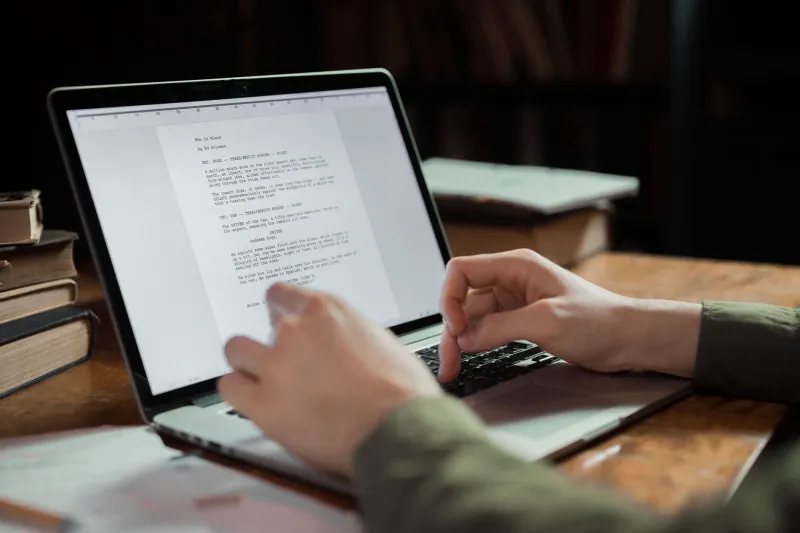
There is a particular sensation that accompanies reading a passage of AI-generated prose — not quite discomfort, not quite boredom, but something closer to the uncanny valley of the written word. The sentences are grammatically sound. The paragraphs observe conventional structure. The vocabulary is varied, even occasionally surprising. And yet something is absent, something that refuses to be named with precision but announces itself on the first reading with quiet insistence. The text feels, in a word that writers will recognize immediately, unoccupied.
To dismiss this quality as mere sentimentality — as a kind of nostalgic attachment to human authorship — is to miss the more interesting question lurking beneath it. What, precisely, is missing? And if writers can identify it with some rigor, might that identification sharpen their understanding of what they themselves are actually doing when they sit down to compose?
The Architecture of Averages
Large language models generate text by predicting the most statistically probable sequence of words given a prompt and a vast training corpus. This is, of course, a reductive summary of a technically complex process, but its core implication for literary quality is worth dwelling on: the machine is, at its foundation, an architecture of averages. It synthesizes patterns from millions of existing texts and produces output that reflects the aggregate shape of human expression rather than any singular instance of it.
This is not a flaw in the engineering. It is the engineering. The model is optimized for coherence and plausibility, not for the kind of controlled deviation from expectation that characterizes memorable writing. When Cormac McCarthy writes a sentence that strips punctuation down to its bones, or when Marilynne Robinson allows a paragraph to breathe at a pace that feels almost geological, they are not following the statistical center of gravity of published prose — they are deliberately departing from it. That departure is where voice lives.
AI prose, by contrast, tends toward the median. It is competent in the way that a stock photograph is competent: well-composed, inoffensive, and stripped of the idiosyncratic detail that transforms a recorded moment into a witnessed one.
The Absence of Stakes
There is another dimension to consider, one that is less technical and more philosophical. Human writing, at its most serious, is produced under conditions of genuine stakes. The writer risks something — reputation, emotional exposure, the possibility of being misunderstood or dismissed. A personal essay about grief is written by someone who has, in some measure, grieved. A novel about moral failure is written by someone who has at least contemplated the nature of their own failures.
This is not a romantic argument that only lived experience produces good art. Imagination and empathy allow writers to inhabit experiences they have not personally endured. But even imagined experience, when rendered with intention, is filtered through a consciousness that has its own history, its own anxieties, its own private lexicon of meaning. The algorithm has processed descriptions of grief in abundance. It has never waited for news that did not come.
What results from this absence of stakes is prose that can describe emotion without transmitting it. The words are correctly deployed, the sentiment is accurately represented, but the signal that moves between writer and reader — the one that produces recognition, that makes a reader feel less alone in their own experience — is not present. There is no sender on the other end of the line.
The Intentional Scar
Practicing writers sometimes speak of a sentence that costs something — a line that required genuine deliberation, that was written and discarded and retrieved, that bears the mark of the effort it took to arrive at. This is not the same as labored writing, which announces its own difficulty and exhausts the reader. It is something subtler: a quality of having been chosen, as opposed to having been generated.
The distinction matters because it is perceptible. Readers may not be able to articulate why a particular sentence lands with force, but they register it. They slow down. They re-read. They dog-ear the page or copy the line into a notebook. This response is not produced by technical correctness alone. It is produced by the sense — intuited rather than analyzed — that a specific human intelligence made a specific decision at a specific moment, for reasons that cannot be fully recovered but can be felt.
Algorithmic text cannot carry this quality because it does not make decisions in the relevant sense. It generates. The difference between generating and deciding is the difference between a river finding its course and an architect choosing where to place a wall. Both produce structure. Only one of them involves intention.
What Writers Can Take From This
The proliferation of AI-generated content is, among other things, an involuntary gift to writers who are willing to use it diagnostically. When you read a passage of machine prose and locate the precise quality it lacks, you are, in effect, naming what you must protect in your own work.
Ask yourself: Where in this draft am I writing from the statistical center? Where am I producing the expected word, the conventional structure, the sentiment that sounds correct without being true? These are the places where your prose begins to resemble output rather than writing — where the ghost of the algorithm enters your own sentences.
The answer is not to pursue difficulty for its own sake, or to cultivate eccentricity as a performance of individuality. The answer is to remain in genuine contact with the specific, the chosen, the weighted. To ask not only whether a sentence is clear but whether it is yours — whether it could only have been written by the particular person you are, at this particular moment in your thinking.
The machine can approximate the surface of human writing with increasing sophistication. What it cannot approximate is the pressure that produces it: the accumulated experience, the considered judgment, the willingness to be wrong in public, the need — not the prompt, but the need — to say something that has not yet been said in quite this way.
The Clarity of Contrast
In a literary landscape increasingly saturated with automated content, the qualities that define genuine authorial voice are becoming easier to identify precisely because they are becoming easier to contrast. The machine has, in a strange way, done writers a service by demonstrating, at scale, what writing looks like when it is produced without a self.
The task for those who write with intention is to understand this contrast not as cause for anxiety but as a form of clarification. What the algorithm cannot mourn, cannot risk, cannot decide — these are not incidental features of human writing. They are its substance. And recognizing them as such is the first step toward protecting them, in your own work, with the seriousness they deserve.