Writing With Weight: Crafting Words That Outlast the Scroll
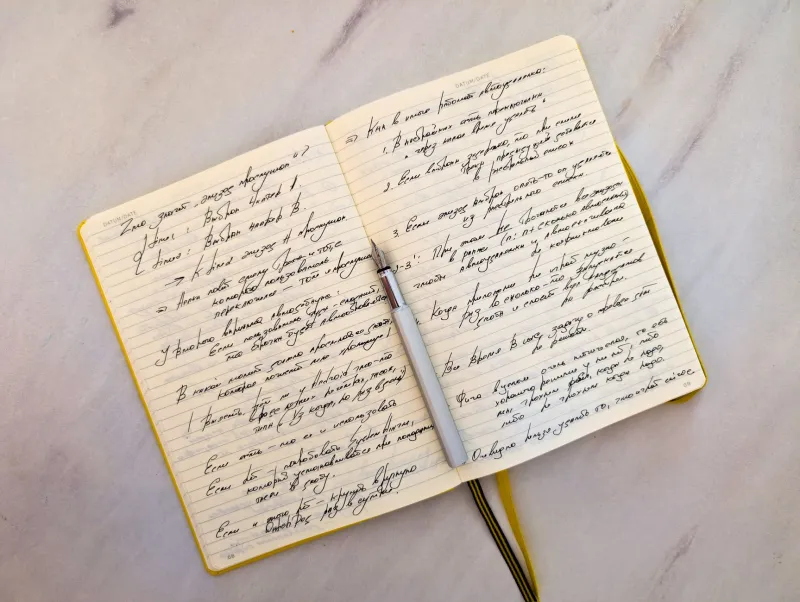
There is a particular kind of silence that follows a sentence written well. Not the silence of indifference, but the kind that settles after a reader has encountered something true — a pause before they continue, or perhaps before they set the page down entirely to sit with what they have just absorbed. That silence is the goal. It is also, in the current media landscape, increasingly rare.
We live and write in a world optimized for velocity. Platforms reward brevity, algorithms favor engagement metrics over depth, and the average American now encounters somewhere between six thousand and ten thousand advertising messages per day — before accounting for social media feeds, newsletters, and the ambient noise of digital life. Into this environment, the writer must release their work and hope it lands.
But hope, without craft, is insufficient.
The Distinction Between Noise and Signal
Let us be precise about what we mean when we speak of intentional writing. It is not, contrary to popular assumption, synonymous with slow writing, long writing, or even literary writing. A tweet can be intentional. A six-hundred-word column can be hollow. The distinction lies not in length but in orientation: intentional writing asks, at every stage of composition, why this word, why this sentence, why now?
Viral writing asks a different question entirely. It asks: what will make someone react? Reaction and resonance are not the same thing. Reaction is immediate and often shallow — it is the reflex. Resonance is what remains after the reflex fades. The most shared pieces of internet writing tend to provoke strong, immediate emotional responses: outrage, laughter, validation. The most enduring pieces of writing — the ones readers return to, quote years later, press into the hands of strangers — tend to do something quieter and more difficult. They create the conditions for recognition.
Recognition, in the literary sense, is the moment a reader encounters on the page something they have felt but never articulated. It is the sensation of being seen. And it cannot be manufactured through trend-chasing or algorithmic optimization. It can only be achieved through the patient, disciplined act of writing toward truth.
The Practice of Purposeful Prose
So what does intentional writing look like in practice, particularly for writers navigating a world of character limits and content calendars?
Begin with the essential question. Before drafting, a writer committed to purposeful prose must be able to answer — honestly, not aspirationally — what this piece is actually about. Not its topic, but its argument. Not its subject, but its soul. If the answer is vague or performative, the writing will be too. Joan Didion famously described writing as the act of imposing a narrative on the chaos of experience. That imposition requires knowing, first, what story you are trying to tell.
Resist the decorative impulse. One of the most common failures in contemporary writing — across genres, platforms, and formats — is the addition of language that performs sophistication without earning it. Adverbs stacked on verbs. Adjectives deployed not because they illuminate but because they fill space. Metaphors introduced and then abandoned. Each of these habits signals a writer who is not yet sure what they mean, and is hoping that density of language will substitute for clarity of thought. It will not. The reader always knows.
Edit for subtext, not just syntax. Most writers understand revision as a process of correction — fixing grammar, tightening sentences, eliminating repetition. These are necessary tasks. But the deeper work of revision is interrogating what the writing implies. What assumptions are embedded in your word choices? What does the structure of your argument suggest about your values? Intentional writing is aware of its own subtext and makes deliberate choices about what to surface and what to leave beneath.
On the Ethics of the Reader's Attention
There is an ethical dimension to this conversation that deserves acknowledgment. When someone reads your work — whether it is a personal essay, a newsletter, a thread, or a novel — they are giving you something that cannot be recovered: time. In a culture of infinite content and finite hours, that exchange carries real weight.
Writers who chase virality are, in a sense, making a transactional bet: give me your click, your share, your momentary outrage, and I will give you a brief dopamine response. Writers who pursue intentionality are making a different kind of offer: give me your sustained attention, and I will try to return it with something worth keeping.
This is not a moral judgment about commercial writing or content creation. Writers must eat, and the market rewards what it rewards. But it is worth naming the difference clearly, because the two orientations produce fundamentally different work — and because readers, even those who cannot articulate why, can feel the difference.
The Long Game
The writers whose work endures — whose essays are reprinted decades after publication, whose sentences become the ones readers memorize without meaning to — are almost universally writers who were playing a different game than their contemporaries. They were not writing for the week's conversation. They were writing for the permanent record.
This does not require genius. It requires commitment: to the sentence, to the reader, to the truth of the thing being written. It requires the willingness to cut a clever line because it serves the writer's ego rather than the piece's argument. It requires patience with revision, skepticism toward easy answers, and a kind of stubbornness about quality that the current content economy does not always reward.
But here is what the current content economy cannot take away: the satisfaction of having written something real. Of having sat with a blank page and produced, through effort and honesty and craft, a piece of writing that does what writing at its best has always done — makes the reader feel less alone in the world.
In a 280-character world, that remains the most subversive act available to a writer. Write something worth keeping. Then do it again.