The Audience Problem: How Sharing the Writing Life Is Replacing the Act of Writing

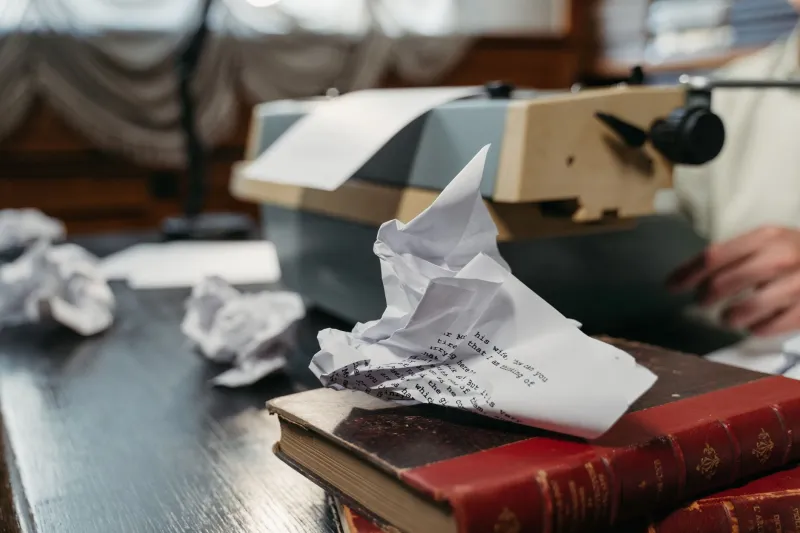
There is a particular kind of photograph that circulates endlessly on social media. A notebook lies open on a café table, its pages filled with handwriting rendered deliberately illegible by the angle of the shot. Beside it: a ceramic mug, a slant of morning light, perhaps a dog-eared paperback with a tasteful cover. The caption reads something like Early mornings and empty pages. This is the work. It receives hundreds of likes. The writer, presumably, returns to the notebook.
Or do they?
This is not a complaint about social media, precisely. It is a question about substitution — about the quiet, gradual way in which the documentation of creative labor has begun to crowd out the labor itself. For a growing number of writers in the United States, the apparatus surrounding the act of writing has become more elaborate, more socially rewarding, and more immediately gratifying than writing ever manages to be on its own terms. And the result, paradoxically, is a profound and largely unacknowledged loneliness — not the productive solitude that good work demands, but the hollow kind that arrives when the performance ends and the page remains blank.
The Infrastructure of Belonging
The past decade has produced an extraordinary proliferation of writing communities. There are Discord servers organized by genre, Substack networks built around mutual readership, Twitter (now X) accountability threads where writers announce daily word counts to strangers, MFA cohort group chats that never fully dissolve, and Instagram communities devoted to what is loosely called bookish culture. On the surface, this infrastructure appears generous — a collective antidote to the mythologized isolation of the solitary writer in the garret.
And in certain respects, it is. Writers from historically marginalized communities have found genuine fellowship in digital spaces that physical geography once denied them. Craft conversations that might otherwise require expensive conference attendance now happen in open forums. The democratization of writerly community is real, and it carries real value.
But community and creative solitude are not interchangeable goods, and the current cultural moment seems reluctant to acknowledge the difference. What many writing communities offer — and what many writers, understandably, seek from them — is not the conditions for deeper work. It is the feeling of being seen as someone who does the work. That feeling is not nothing. But it is not writing.
Performing Solitude
The phrase writing life deserves scrutiny. It appears constantly in creative writing circles, on author websites, in workshop syllabi, and across social media profiles. It suggests that writing is not merely something one does but something one inhabits — a mode of being, an identity worn throughout the day. There is a romantic tradition behind this notion, stretching from the Romantics themselves through the American literary bohemians of the twentieth century.
But the writing life, as it is currently curated and projected online, has taken on a peculiar character. It has become, in many cases, a lifestyle brand — complete with aesthetic consistency, audience engagement metrics, and the implicit pressure to produce content about writing rather than writing itself. The notebook photograph is content. The thread about today's struggle with chapter four is content. The post announcing that one has finally finished a draft is content. Each of these things is legible, shareable, and socially rewarded in ways that the actual hours of composition are not.
This is where the loneliness enters. The writer who spends forty-five minutes composing a caption about her creative process has not spent forty-five minutes inside that process. She has spent forty-five minutes translating it into a form palatable to an audience — which is a fundamentally different cognitive and emotional activity. When the phone is set down and the document is reopened, there is a disorientation that is difficult to name. The audience is gone. The work remains. And the work, unlike the audience, does not applaud.
What Genuine Solitude Actually Requires
Literary solitude is not the absence of other people. It is the suspension of the audience function — the internal censor that monitors how one appears, how one's work will land, whether one is producing at an acceptable rate. This suspension is extraordinarily difficult to achieve, and it becomes harder the more one has trained the mind to perform for watchers.
The writers who have described this state most lucidly tend to share a common observation: that their best work arrived when they stopped thinking about the work as something destined for reception. Flannery O'Connor wrote her fiction in the deep quiet of a Georgia farm, corresponding with friends by letter but keeping her manuscripts largely to herself until they were finished. Don DeLillo has spoken at length about the importance of silence and spatial remove from the literary world. These are not romantic affectations. They are descriptions of a cognitive environment in which genuine creative risk becomes possible.
Risk is the operative word. Writing that matters — writing that surprises its author, that moves in directions no outline anticipated, that arrives at something true rather than something merely competent — requires a willingness to fail in private. Public accountability structures, by design, make private failure uncomfortable. When you have announced to three hundred followers that you will write two thousand words today, the psychological pressure shifts from what does this story need? to how do I meet the number I declared? These are not the same question, and they do not produce the same work.
The Accountability Trap
Accountability groups have become one of the more popular structural solutions to the isolation that writers genuinely do experience. The appeal is understandable. Writing is solitary work, and solitary work can feel meaningless without external validation. An accountability partner or group provides that validation in measured doses: you report your progress, receive encouragement, and feel that your effort has been witnessed.
But accountability, as it is typically practiced in writing communities, measures output rather than quality — words rather than sentences, chapters rather than scenes. It optimizes for the production of material, which is only one small component of what literary writing actually demands. Revision, which most serious writers regard as the central act of their craft, is nearly impossible to account for in these frameworks. How does one report to a group that one spent three hours staring at a single paragraph, deleting and restoring the same sentence four times, before arriving at a version that is almost right? The quantitative logic of accountability has no category for this experience.
The result is that many writers in accountability structures find themselves producing more pages and better fewer sentences. The word count climbs. The work does not necessarily deepen.
Returning to the Room
None of this is an argument for hermetic isolation or for the rejection of community as such. Writers need readers, and readers need writers, and the relationship between them is one of the genuinely sacred transactions of cultural life. The point is more modest: that the space between the writer and the work must be protected from the logic of performance, even — perhaps especially — when that performance is directed at other writers.
The most meaningful writing tends to happen in the absence of witnesses. Not because witnesses are harmful in themselves, but because the awareness of being watched activates a self-monitoring function that is antithetical to the kind of attention good writing requires. The photograph of the notebook is not the notebook. The caption about the struggle is not the struggle. And the community that gathers around the performance of the writing life is not the same as the silence in which the writing life actually occurs.
There is a particular loneliness, too, in recognizing this — in understanding that the community one has built around one's identity as a writer cannot follow one into the room where the actual writing happens. That room is, by necessity, empty. The question worth sitting with is whether we have become so unaccustomed to that emptiness that we are filling it before we ever truly enter.