The Blueprint Betrayal: Why Surrendering Your Outline Might Save Your Story
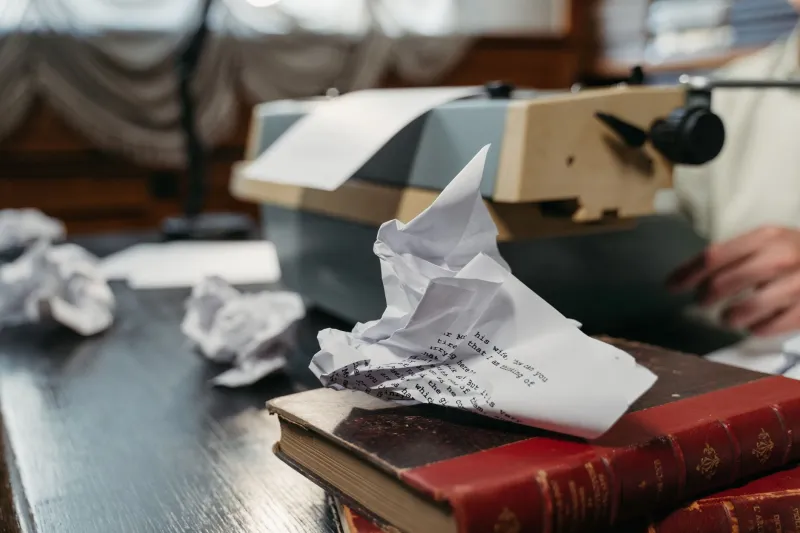
There is a particular kind of writer's paralysis that has nothing to do with the blank page. It arrives, instead, when the page is already too full of plans — when the spreadsheet is color-coded, the chapter beats are numbered, the character arcs have been mapped onto index cards pinned to a corkboard above the desk. Everything is accounted for. Everything is anticipated. And somehow, the story feels dead before a single sentence has been written.
This is the paradox of the outline: a tool designed to liberate the writer from uncertainty can, in its most rigid form, become a contract that forecloses the very surprises that make fiction worth reading.
The Architecture of Control
The appeal of the outline is not difficult to understand. Writing is an inherently disorienting act. You are constructing something from nothing, imposing sequence on chaos, coaxing meaning from the void. It is reasonable — even prudent — to want a map before entering that particular wilderness. Screenwriting programs teach the three-act structure as gospel. MFA workshops frequently assign beat sheets. Bestselling author guides promise that a properly constructed outline is the difference between a finished manuscript and an abandoned one languishing in a drawer.
And there is truth in that promise, up to a point. Scaffolding has its place. A writer who sits down with no sense of direction, no characters of consequence, no thematic intuition whatsoever, is not engaged in organic discovery — they are simply wandering. The outline, at its most useful, is a hypothesis: a writer's best guess, before the work begins, about where the story might go.
The trouble begins when the hypothesis hardens into law.
When the Map Becomes the Territory
E.L. Doctorow — whose Ragtime remains one of the more formally inventive American novels of the twentieth century — once described the experience of writing as driving at night with the headlights on. You can only see as far as the beams reach, he observed, but you can make the whole journey that way. The metaphor is instructive precisely because it refuses the fantasy of total foresight. The road ahead is dark. The destination may be known, but the terrain between here and there is discovered in motion.
Contrast that sensibility with the writer who has not only mapped the entire highway but has also pre-determined every rest stop, every lane change, every scenic overlook. Such a writer is not driving — they are executing a logistics plan. And logistics, however admirably efficient, does not produce literature.
Anne Lamott, in her enduring handbook Bird by Bird, speaks of the necessity of the "shitty first draft" — a concept that has become something of a creative writing cliché, though its wisdom has not diminished with repetition. What Lamott understood, and what the outline-as-commandment tends to suppress, is that first drafts are not performances. They are explorations. The writer who has already decided what will happen in chapter fourteen is not exploring; they are transcribing a decision already made in a less imaginative state of mind.
The Accidents That Become the Story
Some of the most celebrated moments in American literary fiction arrived precisely because a writer ignored, abandoned, or actively defied their original intentions. Toni Morrison has spoken about characters who surprised her — figures who arrived on the page with desires and histories she had not anticipated, pulling the narrative in directions her notes had not predicted. To honor those characters meant releasing the blueprint.
John Irving, a writer famously devoted to knowing his endings before he writes his beginnings, nevertheless acknowledges that the space between the known conclusion and the first sentence must remain porous, must be capable of admitting the unexpected. Even his structured approach contains deliberate gaps — invitations for discovery within a framework that does not mistake itself for the story itself.
The distinction is crucial. There is a difference between an outline that serves the writer and an outline that the writer serves. The former is a working document, subject to revision, expansion, and wholesale abandonment when the story demands it. The latter is a set of obligations — and obligation, in the creative act, is nearly always an enemy of vitality.
What Rigidity Costs the Reader
Readers rarely articulate what they sense when they encounter an over-plotted novel, but they feel it. There is a quality of inevitability — not the satisfying inevitability of a well-constructed tragedy, where every choice feels both surprising and retrospectively necessary — but rather the flat, mechanical inevitability of a story that was decided before it was written. Characters behave not as they must, given who they are, but as the outline requires, given where the plot needs to go. Dialogue serves architecture rather than revelation. Scenes arrive on schedule, perform their assigned functions, and depart.
This is not fiction. This is assembly.
The most memorable characters in American literature are memorable, in large part, because they seem capable of behavior their authors did not predict. Huck Finn's moral crisis on the raft — his decision, against every social teaching he has internalized, to help Jim — carries the force it does because it feels chosen rather than engineered. Whether or not Twain had planned that moment from the outset is somewhat beside the point. The point is that the moment reads as discovery, as something arrived at rather than installed.
A More Honest Relationship with the Plan
None of this is an argument against preparation. It is an argument against the fetishization of preparation — against the writer who spends six months outlining a novel and then discovers, three chapters in, that the outline has become a more comfortable place to live than the manuscript itself.
The outline, when treated honestly, is a first draft of thinking. It deserves the same skepticism and revisability as any other first draft. It should be consulted, questioned, and, when the story grows large enough to require it, set aside entirely.
Write toward the plan, by all means. But write past it when the characters insist. Follow the tangent that the outline did not anticipate. Allow a minor figure to step forward and claim the center. Let the ending you planned recede in favor of the ending the story has earned through its own unfolding.
The blueprint is not the building. The map is not the territory. And the outline — however carefully constructed, however lovingly annotated — is not the story. The story is what happens when you have the courage to discover what the outline could not have known.
That courage, more than any structural methodology, is what separates the writer from the planner. And it is, ultimately, what separates the novel that breathes from the one that merely performs.