The Stranger in the Margin: Why the Unknown Reader Remains the Writer's Most Essential Invention
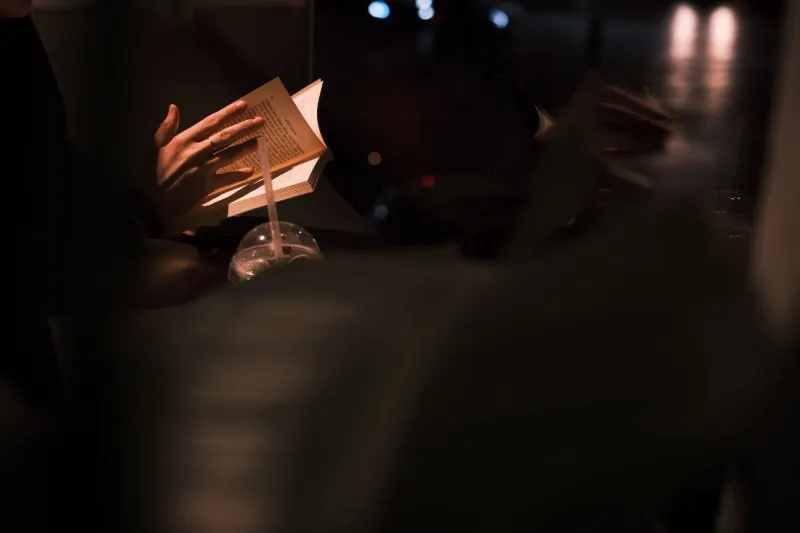
Somewhere in the United States tonight, a person you will never meet is reading something you wrote. You do not know their name, their age, or the circumstances under which they came to your work. You do not know whether they are reading in a well-lit apartment in Chicago or by phone light in a car parked outside a hospital in rural Georgia. You do not know what they are hoping for, what they are carrying, or what sentence of yours — if any — will stay with them past morning.
You know only this: they are there. And the fact of their presence — unmeasured, unverified, essentially imagined — may be the most important fact in your writing life.
This is a claim that requires some defense in the current moment, because the current moment offers writers something that would have seemed fantastical to any previous generation of literary practitioners: data. Detailed, granular, continuously updated information about who is reading, for how long, on what platform, and with what apparent level of engagement. The algorithmic machinery of contemporary publishing and content distribution has made the reader newly visible — not as an individual, but as an aggregate, a demographic cluster, a behavioral pattern that can be studied and, crucially, optimized for.
The question worth asking is what writers lose when they accept this visibility as the primary terms of their relationship with their audience.
The Fantasy That Makes Writing Possible
Every writer who has sat down to produce serious work has, at some point, invented a reader. Not consciously, perhaps, and not in the sense of a demographic profile or a target market. Something less defined and more essential: a sense of a presence on the other side of the page, someone for whom the work is being made, someone whose hypothetical encounter with the writing shapes the decisions the writer makes in the act of composition.
This imagined reader is a fiction, and it is a necessary one. Writing is, at its core, an act of communication — which means it requires, even in the absence of any actual audience, the felt possibility of being understood. The imagined reader provides that possibility. They are the writer's internalized guarantee that the work is not simply a private exercise, that it reaches toward something outside the self.
What matters about this figure — what makes them generative rather than merely comforting — is precisely their unknowability. Because the imagined reader is not defined, they cannot be reduced. They can be anyone: younger than you, older than you, coming from a background entirely unlike your own, encountering your work in circumstances you cannot anticipate. Their potential breadth is the source of their utility. Writing toward an unknown reader requires you to be clear where a familiar reader would follow you into obscurity, and to be honest where a known reader might accept flattery.
What the Dashboard Cannot Measure
The analytics dashboard offers something genuinely valuable: a corrective to certain kinds of self-delusion. Writers who believe their work is reaching a broad audience when it is not, writers who assume their readers are a particular demographic when the reality is more complicated — these are writers who can benefit from honest data.
But the dashboard has a structural limitation that its interface tends to obscure. It measures what it can measure: clicks, time-on-page, shares, geographic distribution. It does not and cannot measure the reader who encountered your essay at the precise moment it was most necessary to them. It cannot capture the person who read your story once, years ago, and has carried a single image from it into every difficult situation since. It cannot account for the reader who will not encounter your work until after you are gone.
These unmeasurable readers are not hypothetical consolations. They are the actual constituency of serious literature. The history of American letters is full of writers whose contemporary metrics were unimpressive and whose lasting significance was vast — writers whose work found the readers it needed not through optimization but through the slow, untrackable movement of genuine resonance across time.
When writers optimize for the measurable audience, they are, in effect, writing for the present moment's capacity to register value. This is a reasonable strategy for certain kinds of content production. It is a poor strategy for literary work, which has always drawn its meaning partly from its indifference to the conditions of its immediate reception.
The Risk of the Known Audience
There is a subtler problem with writing toward a well-defined, data-rich audience, one that operates at the level of the sentence rather than the career.
When a writer knows too much about who is reading — their preferences, their likely objections, their demonstrated tolerances for difficulty and discomfort — the knowledge begins to govern the writing. Not always consciously. The writer does not sit down and think: my audience skews toward readers who prefer shorter paragraphs and accessible metaphors, therefore I will simplify. But the knowledge is present, and it exerts pressure.
The result is work that is legible to its intended audience and closed to everyone else. Work that is, in a precise sense, too well-fitted to the readers it knows and too poorly prepared for the readers it might otherwise reach.
The unknown reader — the stranger in the margin, the person whose encounter with your work you cannot predict or prepare for — demands something different. They demand that the work be sufficient on its own terms, that it carry its meaning without the assistance of a shared context, that it be honest rather than strategic. Writing toward this reader is writing toward the work's best version of itself.
Recovering the Stranger
This is not an argument against knowing your audience, or against the practical necessities of contemporary publishing. Writers must navigate the world as it is, and the world as it is includes algorithms, analytics, and the genuine advantages of understanding who is likely to read your work.
It is an argument for maintaining, alongside that practical knowledge, a deliberate relationship with the reader you cannot know. For building into your writing practice some space — some protected creative territory — where the only reader you are writing for is the one you have invented: unknown, ungoverned by data, capable of encountering your work in ways you will never see and cannot anticipate.
That reader is not a fantasy to be indulged. They are a discipline to be practiced. Writing toward them is how you ensure that the work retains the qualities that make it worth encountering at all — the qualities that no dashboard will ever successfully measure, and that no algorithm will ever successfully predict.
Somewhere tonight, they are reading. Write for them.