The Unfinished Page: How Urgency Culture Is Eroding the Art of Revision
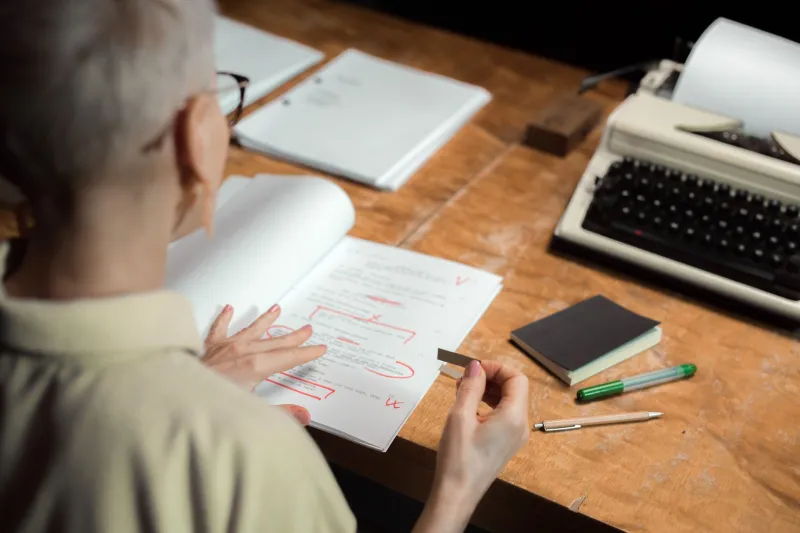
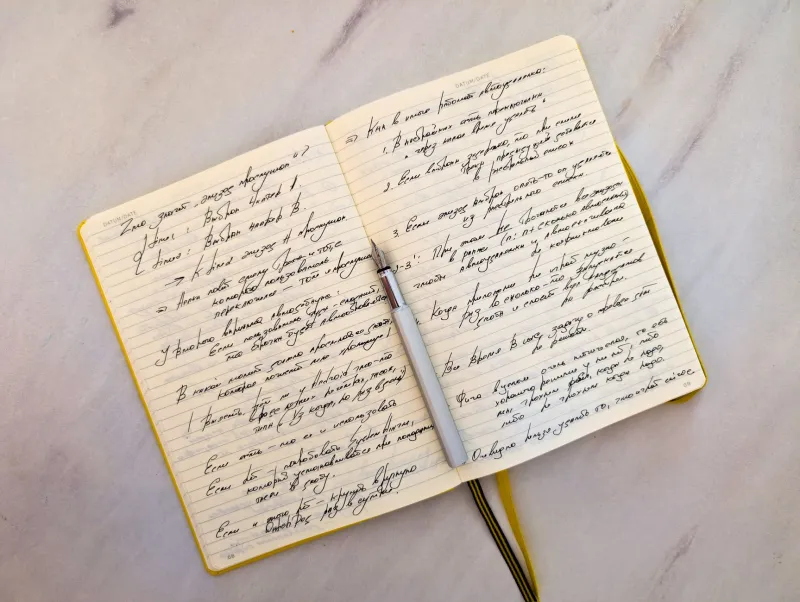
There is a moment, familiar to anyone who has spent serious time with language, when a draft ceases to be a document and becomes a conversation — a negotiation between what the writer intended and what the words, left alone long enough, are actually saying. That moment requires patience. It requires the willingness to sit inside discomfort, to read a sentence and feel, in one's chest, that something is wrong before the mind can articulate precisely what. Revision, in other words, is not a mechanical process. It is an act of listening.
And we are, by nearly every cultural measure, losing our capacity for it.
The Velocity Trap
The pressure to publish immediately is not new, but its current intensity is unprecedented. Social media platforms have conditioned writers — professional and amateur alike — to treat the first draft as the final product. The tweet, the thread, the newsletter dispatched before the coffee grows cold: these formats celebrate spontaneity and punish delay. The algorithm does not wait for you to find the better word. The feed has already moved on.
AI-generated content has accelerated this dynamic in ways that deserve honest examination. When a tool can produce five hundred words of serviceable prose in under ten seconds, the implicit message is that the labor of refinement is inefficient — a relic of slower, less productive times. Why sit with a paragraph for forty minutes when a model can generate a paragraph in forty milliseconds? The question sounds rhetorical. It is not. The answer matters enormously, and it is not simply a defense of craft for craft's sake.
What gets produced in forty milliseconds is competence. What emerges from forty minutes of deliberate revision is something closer to truth.
What the First Draft Actually Is
Every writer who has worked seriously with language understands, at some level, that the first draft is not writing — it is the raw material from which writing is eventually made. The novelist Anne Lamott famously gave permission for what she called the "shitty first draft," not because such drafts were acceptable final products, but because they were necessary starting points. The mess had to exist before it could be organized into meaning.
When writers skip revision, they are not delivering the first draft. They are delivering the idea of a first draft — the outline of a thought that has not yet been pressured into precision. Readers may not always consciously identify what is missing. But they feel it. There is a texture to unrevised prose, a kind of breathlessness, a tendency to circle rather than land. The sentences are often technically correct and emotionally hollow. They say something without quite meaning it.
This is the quiet cost of urgency culture: not bad writing, exactly, but writing that has not yet become itself.
Revision as Ethical Practice
There is an argument to be made — and I want to make it plainly — that revision is not merely an aesthetic concern. It is an ethical one. Words have consequences. A poorly considered sentence, published in haste and amplified by a platform's reach, can mislead, diminish, or wound. The writer who refuses to revise is, in a meaningful sense, refusing to take responsibility for the full weight of what language can do.
This is particularly relevant in the context of cultural commentary, personal essays, and any writing that engages with the experiences of real people or communities. The first draft of an argument about race, gender, class, or grief is almost never the argument that should be published. It is the argument the writer needed to make in order to discover what they actually believe. The revision is where honesty lives — where the writer confronts the oversimplification, the borrowed phrase, the assumption that slipped in unexamined.
To skip that confrontation is to mistake the rehearsal for the performance.
The Radical Patience of the Deliberate Edit
In the current moment, choosing to revise — truly revise, not merely proofread — is a countercultural act. It means accepting that your work will appear later than someone else's. It means tolerating the discomfort of an unfinished draft in a world that treats incompleteness as failure. It means resisting the dopamine loop of the immediate publish, the instant response, the engagement metric that arrives before the ink is dry.
This kind of patience is not passive. It is rigorous and demanding. It requires the writer to read their own work with a measure of critical distance that is genuinely difficult to achieve — to ask not only whether the sentences are correct but whether they are necessary, whether they are honest, whether they are doing something that could not be done more precisely. It requires, in short, a commitment to the reader's experience over the writer's convenience.
Revision is where the writer stops performing the act of writing and begins to serve the work itself.
What Intentional Language Demands
The philosophy underlying serious literary practice has always held that words carry weight — that they are not neutral vessels for information but active forces that shape how readers perceive the world, themselves, and one another. If that premise is accepted, then the obligation to choose words carefully is not optional. It is foundational.
The culture of immediacy does not merely devalue revision; it implicitly rejects this premise. It treats language as disposable, as content to be consumed and replaced, as a means to an end rather than an end in itself. And writers who absorb this assumption — even unconsciously, even while believing themselves committed to craft — begin to write accordingly. The prose becomes faster, lighter, more easily forgotten. It stops asking anything of the reader because it stopped asking anything of the writer first.
Returning to revision is, in this sense, a return to seriousness. Not solemnity — serious writing can be funny, strange, playful, even chaotic — but the kind of seriousness that insists language matters enough to warrant care.
The Draft That Earns Its Ending
There is a particular satisfaction available only to writers who have revised thoroughly: the moment when a piece finally closes in a way that feels earned rather than arrived at. When the final sentence resonates because of everything that was cut to make room for it. When the argument lands because it was tested against its own weaknesses and survived.
That satisfaction is not available at the speed of a social media feed. It cannot be generated by an algorithm. It belongs to the writer who sat with the imperfect draft long enough to understand what it was trying to become — and then did the slow, unglamorous work of helping it get there.
The first draft is where writing begins. Revision is where it lives.