Haunted by Someone Else's Sentence: On Influence, Absorption, and the Ethics of Literary Memory
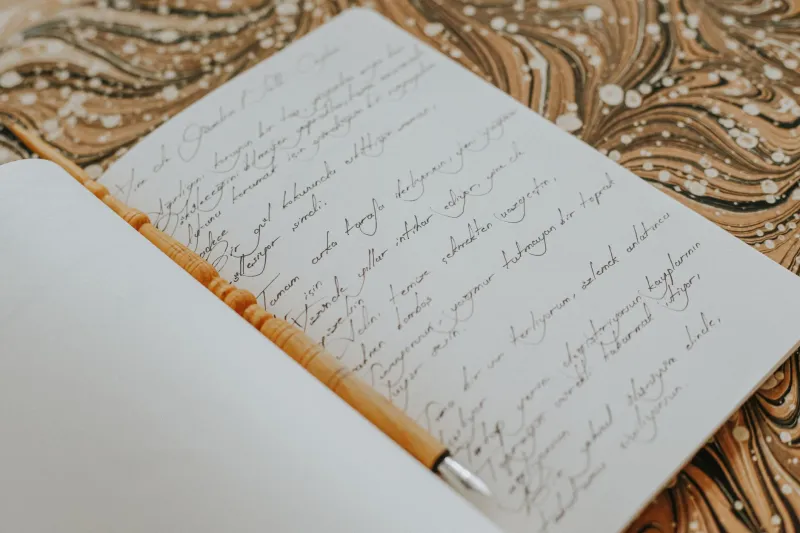
There is a particular kind of dread that arrives mid-draft, quiet and specific. You are reading back your own sentences — pleased, even — when something catches. A rhythm too familiar. A construction you have seen before, in someone else's book, on someone else's page. The pleasure drains. You sit with the uncomfortable knowledge that you have, however innocently, become a thief.
This is not the dramatic plagiarism of headlines and academic scandals. It is something murkier, more human, and ultimately more interesting: the slow, unconscious absorption of language that happens to every writer who reads deeply and writes seriously. The stolen sentence is rarely stolen with intention. It is borrowed by the mind without consent, filed away without a receipt, and retrieved later as if it were always yours.
Understanding how this happens — and what to do when it does — is one of the quieter ethical obligations of the writing life.
The Porous Mind and the Problem of Deep Reading
Writers are, by vocation, unusually attentive readers. We do not merely follow the story; we study the machinery beneath it. We notice how a particular writer handles the turn of a paragraph, how a sentence earns its period, how a single word choice shifts the entire temperature of a scene. This kind of reading is generative and necessary. It is also, inevitably, accumulative.
The cognitive science here is not complicated. The brain does not warehouse experience in neat, labeled compartments. Language, especially language encountered repeatedly or at moments of high emotional engagement, becomes embedded in the structures we use to produce our own speech and writing. A sentence that moved you at twenty-two does not sit politely in a memory folder. It migrates. It becomes part of the vocabulary of your interiority.
The late Toni Morrison once described reading widely as a form of conversation across time. That conversation, like all genuine exchanges, leaves marks. You are changed by what you hear, and what changes you inevitably shapes what you later say.
This is the condition from which accidental echoing emerges. It is not a moral failure. It is the consequence of being a serious reader in a tradition built on centuries of accumulated language.
The Guilt That Follows Recognition
And yet: the guilt is real, and it deserves examination rather than dismissal.
When a writer recognizes a borrowed phrase in their own work, the guilt often arrives disproportionate to the offense. There is a sense of fraudulence, of having presented something as original that was, in fact, inherited. For writers who hold authenticity as a core value — and most serious writers do — this recognition can feel like a small collapse of identity.
This response is worth interrogating. The guilt is useful insofar as it prompts honesty and revision. It becomes counterproductive when it metastasizes into paralysis, when the writer becomes so afraid of unconscious influence that they stop reading widely, or so suspicious of their own sentences that they cannot move forward in a draft.
The distinction that matters here is between influence and appropriation. Influence is the water a writer swims in; appropriation is taking someone else's vessel. Recognizing where you have absorbed and reproduced a specific construction — a distinctive metaphor, an unusual syntactic pattern, a phrase so particular it could only have originated in one place — is the beginning of ethical navigation, not the end of it.
Tracing the Thread Backward
The most productive response to this discovery is not shame but archaeology.
Deliberate influence-tracing — the practice of sitting down and honestly mapping which writers have left the deepest impressions on your prose — is one of the more clarifying exercises available to a working writer. It requires a kind of intellectual humility that is uncomfortable precisely because it is accurate. You are admitting, to yourself at minimum, that your voice is not entirely your own. That it is, in part, a conversation.
This tracing serves multiple purposes. It allows you to identify which borrowed elements you have genuinely transformed — absorbed, digested, and rendered into something new — and which you have merely replicated. Transformation is the work of influence; replication is the failure of it.
It also, perhaps more importantly, allows you to make the conversation explicit. Some of the most powerful writing in the American literary tradition operates in deliberate dialogue with its predecessors. The writers who acknowledge their debts — in their prose, in their essays, in their public conversations about their craft — do not diminish their originality. They locate it within a tradition, which is precisely where originality becomes legible.
The Gray Zone and How to Inhabit It Honestly
The ethical gray zone that surrounds unconscious borrowing does not resolve cleanly, and any writer who claims otherwise is either not reading enough or not paying sufficient attention to their own work.
What honest navigation looks like, in practice, is roughly this: read your drafts with the specific intention of identifying constructions that feel borrowed rather than built. When you find them, ask whether they have been transformed or merely transplanted. If the latter, revise — not because the original writer will ever know, but because you will, and because your work deserves the integrity of your own effort.
When the borrowing has been transformed — when a rhythm you absorbed from Marilynne Robinson or a structural instinct you developed through years of reading Denis Johnson has become genuinely yours through use and reinvention — acknowledge it, at least privately. Keep a reading journal that tracks influence with honesty. Know your literary debts the way a musician knows their influences: not as a source of embarrassment, but as a map of the tradition you are working within and, eventually, contributing to.
The stolen sentence, it turns out, is rarely purely stolen. More often it is a gift — taken without asking, perhaps, but capable of being repaid through the new work you make with it. The writer's task is to ensure that the repayment is genuine, that what you return to the tradition is something it did not already possess.
That is not a small obligation. But it is, in the end, a clarifying one.