The Invisible Wall: Why Writing Without an Audience Has Become an Act of Defiance
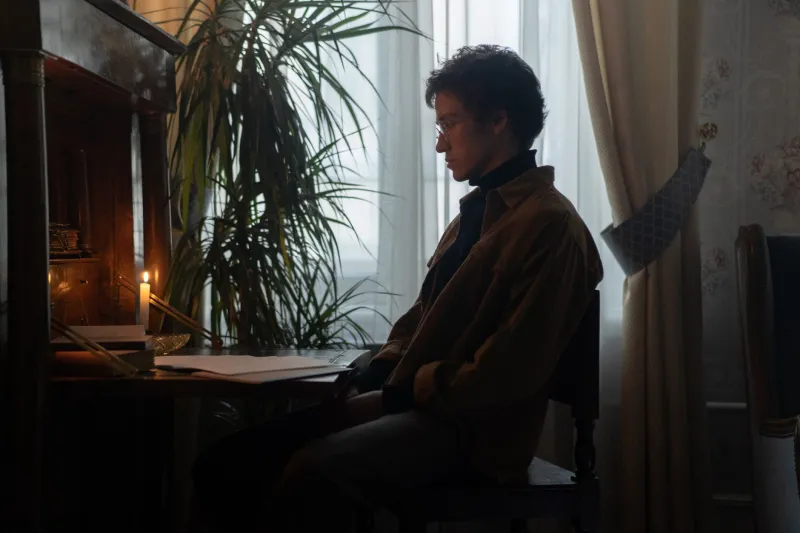
There is a particular quality of silence that exists only when no one is watching. Not the silence of an empty room — that is merely the absence of sound — but the deeper, more demanding silence of a mind that has consented to be alone with its own material. Writers once lived inside that silence as a matter of course. Now, increasingly, they must choose it deliberately, and the choosing has become its own kind of statement.
Something has shifted in the culture of American writing, and the shift is not confined to the publishing industry or the academy. It has settled into the daily texture of how writers work, where they work, and — perhaps most consequentially — who they imagine watching them work. The rise of coworking spaces, social media writing challenges, live-stream drafting sessions, and productivity-focused communities has not simply added new options to the writer's environment. It has quietly redefined what writing is supposed to look like.
The Architecture of the Observed Draft
Consider the coworking café, that most emblematic space of contemporary creative labor. Its appeal is genuine: the low hum of ambient noise, the mild accountability of shared presence, the sense of participating in something collective. Writers have always sought such spaces — the Paris salons, the Greenwich Village coffeehouses, the corner booth at the diner with the refillable coffee. None of this is new.
What is new is the layer of documentation that now accompanies it. The laptop screen photographed from above, framed by an artisanal latte. The caption: 2,000 words deep. The grind doesn't stop. The tweet announcing a writing sprint with a countdown timer. The Discord channel where members post their word counts every thirty minutes, each number a small bid for communal recognition. The writing is still happening — in some cases, happening productively — but it is happening inside a performance frame, and that frame changes things in ways that are rarely examined honestly.
When the act of writing becomes something one does in front of others, even passively, even digitally, the internal orientation of the writer shifts. The question is no longer only what am I trying to say? It becomes, alongside that, how does this process reflect on me? These are not incompatible questions, but they are not the same question, and the second one, left unexamined, has a way of crowding out the first.
Performance and the Contaminated Draft
The psychologist Mihaly Csikszentmihalyi described flow as a state in which action and awareness merge, self-consciousness recedes, and full absorption in a task becomes possible. Writers recognize this state, even if they use different language for it: the hours that disappear, the paragraphs that arrive fully formed, the sensation of following the work rather than constructing it. It is, by most accounts, the condition under which the most honest and surprising writing tends to emerge.
Flow requires, among other conditions, a freedom from self-monitoring. The moment a writer begins to assess how the writing looks — not whether it is accurate or alive, but whether it appears disciplined, productive, authentic — the internal critic has been handed a megaphone. That critic is not always wrong, but it is almost never useful during a first draft. Its proper domain is revision. When it is invited into the generative phase by the ambient pressure of social observation, the result is writing that is tidier than it ought to be, safer than the material demands, and subtly shaped by an imagined audience rather than by the truth of the subject.
This is not a new problem. Writers have always contended with the internalized reader. But the social architecture of contemporary writing culture has given that internalized reader a much earlier invitation.
What Solitude Actually Does
To argue for solitary writing is not to romanticize isolation or to suggest that community has no place in a writer's life. Community matters enormously — for feedback, for sustenance, for the particular courage that comes from knowing others are engaged in the same difficult work. The question is one of sequence and proportion.
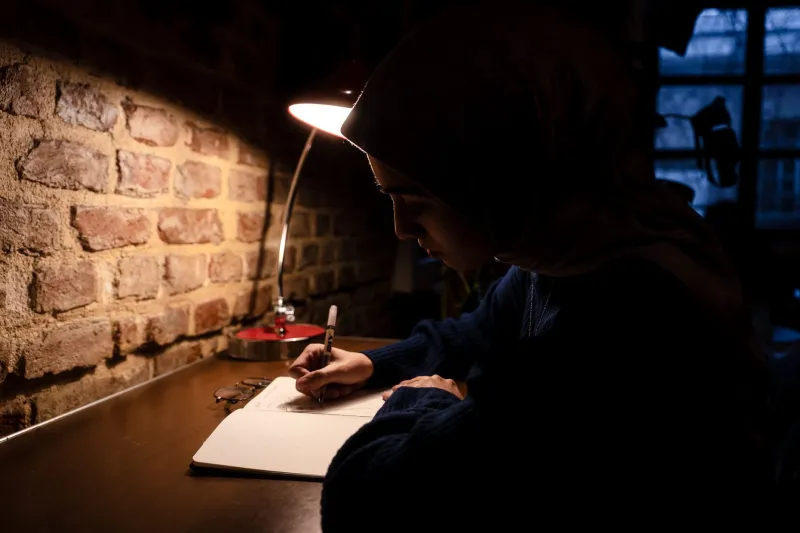
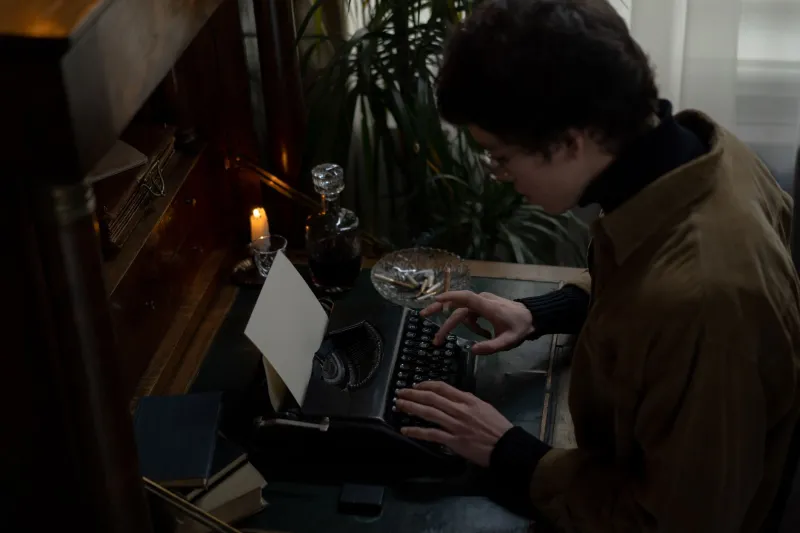
The generative act — the first encounter between a writer and a piece of material — benefits from conditions that contemporary writing culture is increasingly reluctant to provide: unstructured time, freedom from documentation, and the permission to produce work that no one will ever see. The notebook that exists for no reader. The draft that will be deleted. The two hours in a quiet room with the phone in another building.
These conditions are not luxuries. They are functional prerequisites for a particular kind of thinking — the kind that does not know where it is going and must be allowed to find out. Structured sprints, public accountability, and communal word-count goals are useful tools for writers who already know what they are writing and need momentum to complete it. They are poorly suited, and potentially damaging, to the earlier and more vulnerable phase in which a writer is still learning what the work wants to be.
The conflation of these two phases — the exploratory and the productive — is one of the subtler harms of the current culture. When every stage of writing is treated as a performance opportunity, the exploratory phase is either rushed past or abandoned entirely in favor of work that can be shown, counted, and applauded.
The Defiance in Disappearing
There is something that feels almost countercultural, in the present moment, about a writer who simply goes away. No check-ins. No sprint announcements. No before-and-after word counts. Just the work, conducted in private, reported to no one, accountable only to the material itself. In a creative culture that has made visibility a near-moral virtue — where the undocumented process is treated as either suspicious or wasteful — this kind of disappearance registers as a refusal.
And perhaps it should. Perhaps the willingness to write without witnesses, to draft badly in private, to spend a morning producing nothing that can be shown or counted, is a form of artistic integrity that deserves to be named as such. Not because solitude is inherently superior to community, but because the capacity for solitude — genuine, unperformed, unrecorded solitude — is what makes the work answerable to something larger than the approval of whoever happens to be watching.
The writers whose sentences have outlasted their own lifetimes were not, by and large, writers who optimized their visibility. They were writers who found the conditions under which they could be honest, and then they protected those conditions with a seriousness that contemporary culture would likely find eccentric, even rude.
There is a lesson in that seriousness. It is not fashionable. It does not generate engagement metrics. It will not trend.
It will, however, produce better sentences. And in the end, the sentences are the only thing that matters.