The Company You Keep: How Writing Communities Can Quietly Undermine the Work They Claim to Serve
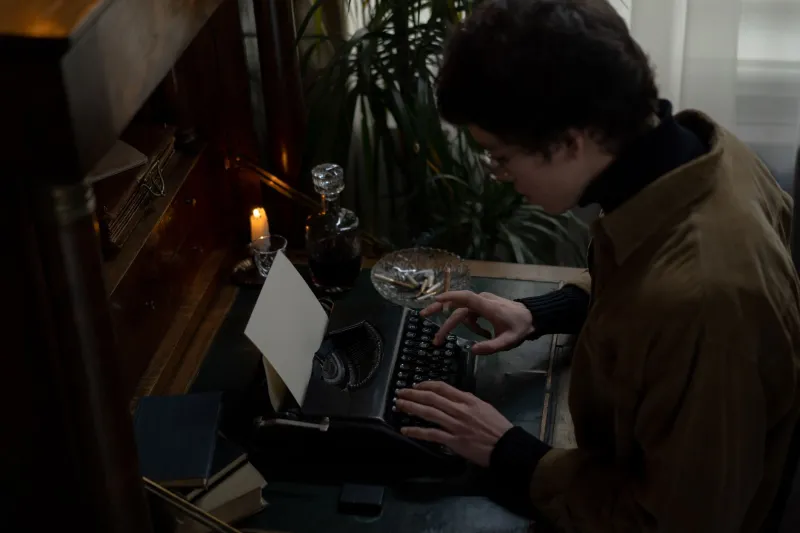
There is a moment, familiar to most writers who have spent any time in a workshop or online literary forum, when the conversation about the work becomes more consuming than the work itself. The thread runs long. The feedback accumulates. The discussion of craft, of intention, of what the story might become, fills the hours that were once reserved for the actual making of things. And somewhere in that productive-feeling exchange, the manuscript sits untouched.
This is not an argument against community. It is an argument for clarity — about what community costs, what it provides, and how rarely writers pause to audit the transaction.
The Proliferation of the Writing Circle
In the last two decades, the infrastructure of the American writing community has expanded dramatically. MFA programs multiplied. Online workshops emerged to serve writers who could not relocate or afford residencies. Social platforms built entire ecosystems around the literary life: hashtags dedicated to word counts, Discord servers organized by genre, Substack comment sections where readers and writers blur into a single indistinct audience. The message embedded in all of this infrastructure is consistent and well-meaning — you do not have to write alone.
And yet the message obscures a fundamental truth about how original thought actually forms. It forms alone. It forms in the specific, uninterrupted quiet that most communities, however warmly intentioned, are structurally designed to interrupt.
The writer Anne Lamott famously described the first draft as belonging entirely to the writer — a private, imperfect, exploratory document that should be protected from outside judgment until it has had the chance to become something. What she identified intuitively, cognitive researchers have since examined more rigorously: the creative mind requires sustained, low-distraction attention to do its deepest work. Community, by its very nature, is a source of distraction. Even good distraction. Even distraction that feels like progress.
The Feedback Dependency
There is a particular vulnerability that develops in writers who workshop frequently and early. The habit of seeking response before the work has fully crystallized trains the creative instinct to remain provisional — to hold every sentence at arm's length, waiting for external confirmation before committing to a direction. This is not humility. It is, in practice, a form of avoidance dressed in the language of collaboration.
Feedback, when it arrives before a writer has developed a strong relationship with their own material, does not refine the work so much as colonize it. The voices of workshop participants — their preferences, their interpretations, their aesthetic assumptions — settle into the manuscript alongside the writer's own intentions, and the two become difficult to distinguish. The writer who submits a half-formed chapter for group response is not receiving craft guidance so much as outsourcing the imaginative labor that only they can perform.
This is not a failure of the workshop model. It is a misapplication of it. Feedback is most useful when a writer already knows, with some confidence, what the work is trying to be. Without that prior knowledge, the response of others does not illuminate — it redirects.
The Social Performance of the Writing Life
Online writing communities introduce a complication that in-person workshops largely do not: the audience is always present, and participation is always legible. When a writer posts their daily word count, shares a passage they are proud of, or engages in a public conversation about process, they are not simply connecting with peers. They are performing the writing life for an audience that rewards visibility.
This performance is not without value. It can create accountability, build readership, and sustain motivation during difficult stretches. But it also reshapes the writer's relationship to their own work in ways that deserve examination. The question of whether a sentence is good begins to compete with the question of whether it will be well-received. The private experience of making something gives way, incrementally, to the anticipation of how that something will be received. The interior compass — the writer's own sense of what the work needs — becomes harder to hear beneath the ambient noise of an audience.
In a culture that has come to equate visibility with legitimacy, the writer who works in sustained privacy can feel professionally negligent, as though disappearing from the conversation is a form of failure. It is not. It is, for most serious literary work, a prerequisite.
Selective Participation as a Practice
None of this is to suggest that writers should become hermits, suspicious of every offer of connection. The solution is not withdrawal but selectivity — a deliberate, periodically revisited assessment of which communities are serving the work and which are consuming the attention that the work requires.
A useful framework is to distinguish between communities of accountability and communities of performance. The former are small, consistent, and focused on the private progress of each writer's project; the latter are large, public, and oriented toward the display of literary identity. Both have their place, but they serve different needs, and conflating them is where most writers get into trouble.
Equally useful is the practice of timing participation strategically. Many writers find that early drafts require near-total isolation — a period of protected work in which the manuscript is allowed to develop according to its own internal logic, without the interference of outside interpretation. Feedback, when it arrives at the right moment in the process, can be transformative. When it arrives too early, it is frequently destructive, even when it is technically correct.
The writer who builds this kind of deliberate rhythm — deep solitude in early drafts, selective engagement in revision, thoughtful participation in community — is not antisocial. They are disciplined in a way that the culture of constant connection has made unfashionable.
What Solitude Protects
The private space of writing is not simply the absence of other people. It is the presence of the writer's own unmediated thought — the slow, patient accumulation of perception, language, and meaning that produces a voice genuinely distinct from the voices of the culture surrounding it. That distinctiveness, that singularity, is the thing that makes literature worth reading. And it is precisely the thing that community, in its eagerness to welcome and respond and improve, most easily erodes.
To protect that space is not selfishness. It is fidelity to the work — and, ultimately, to the reader who will one day encounter it and find there something they could not have found anywhere else.
The writing life has always required a certain tolerance for solitude. What it requires now, in an era of proliferating connection, is the additional discipline of choosing that solitude deliberately, repeatedly, and without apology.